
JLPT practice that adapts as you learn.
Practice JLPT grammar, vocabulary, and kanji while JPDrills adapts review and pacing from your practice history. Use Memory Strength when you want direct control over what to reinforce. When a harder question includes an in-depth explanation, work through the reasoning without leaving practice to search elsewhere.
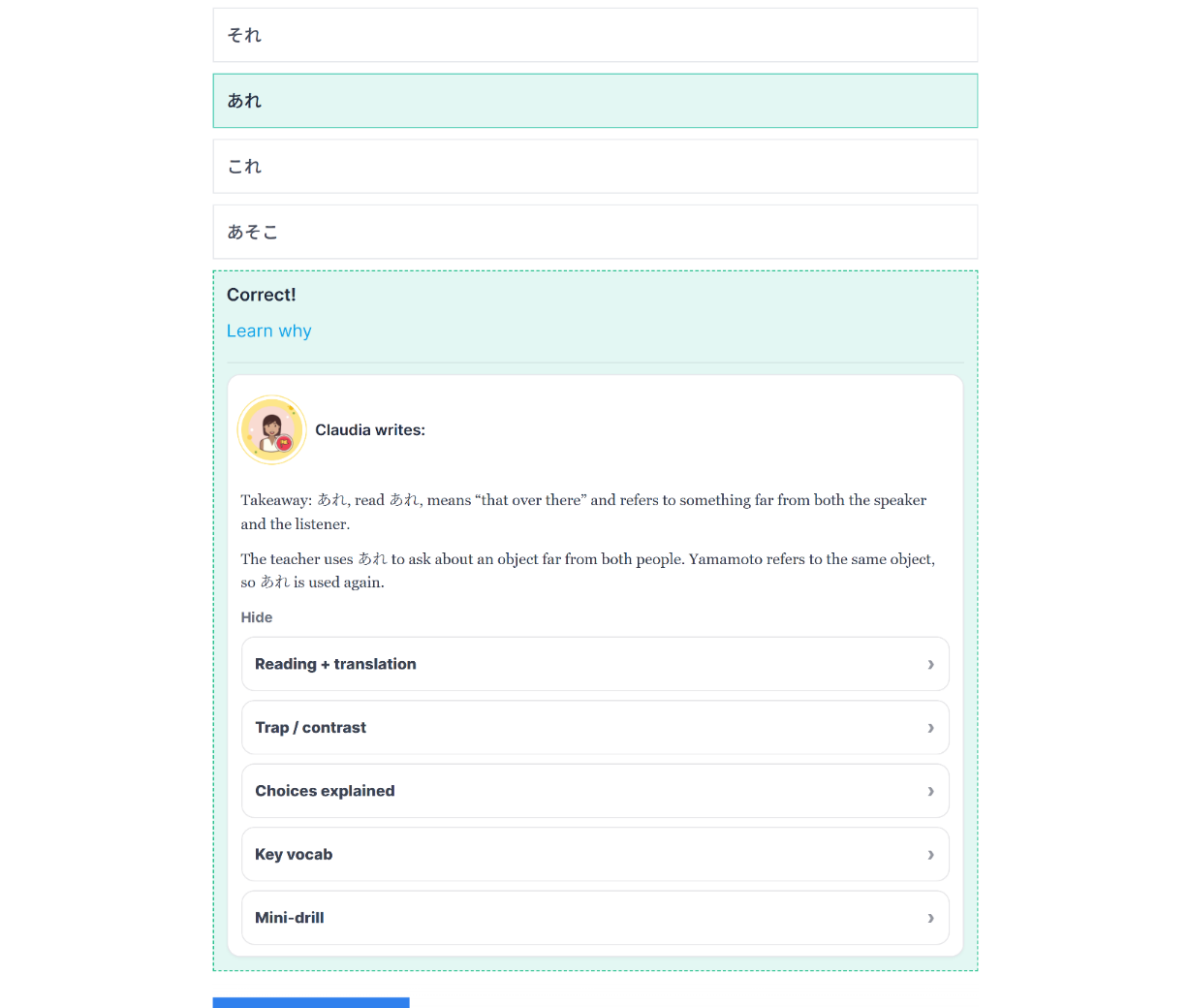
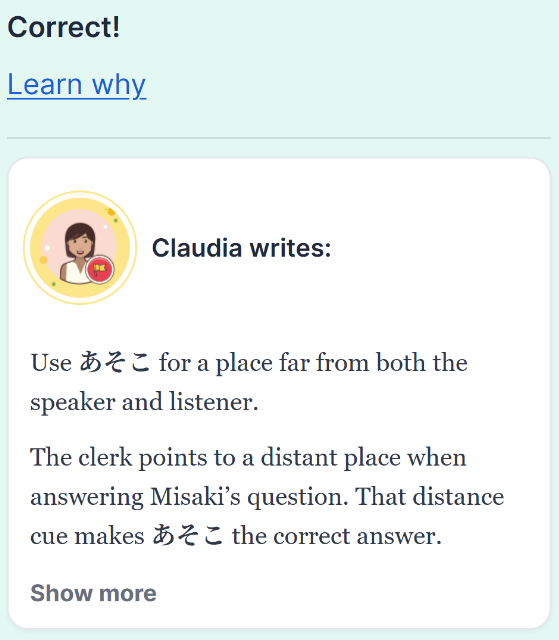
Explanations for harder questions
Some of the more difficult questions include in-depth explanations that unpack why the answer works. When an explanation is available, you can resolve the confusion inside JPDrills instead of stopping practice to search elsewhere.
The example shown is a current JLPT N5 Grammar question in JPDrills.
Review powered by FSRS
A fixed quiz makes you revisit the set whether every question needs it or not. SM-2-style schedulers usually adjust an item through comparatively simple ease and interval rules. JPDrills uses FSRS to estimate how each practiced item is holding from its answer history and schedule review from that memory state.
A question that still needs reinforcement can return sooner, while material that is holding can wait longer. Review is managed question by question instead of forcing an entire set to move together.
Pacing that responds to your practice rhythm
JPDrills can smooth review when the amount waiting for you rises beyond the pace set for the day. Its pacing safeguards also reduce the challenge of a return after time away, so an old workload is less likely to become the pace you are forced to resume. The aim is to help keep review from snowballing.
Practice by Memory Strength
Memory Strength makes the state of your practice visible as New, Learning, Solid, and Strong. Let JPDrills manage review normally, or target one of those states when you want to reinforce Learning material, revisit New questions, or deliberately test Strong material without rebuilding a separate deck.
In-depth explanations on difficult material
When a difficult question includes an explanation, stay in the practice flow when a score alone does not explain the mistake.
From individual questions to connected practice
Today, JPDrills adapts review around the material you choose to practice. The direction ahead is to make the practice itself more coherent: related questions organized around themes and real situations, so they work together toward something you can demonstrate instead of feeling like unrelated prompts.
The goal is not to take choice away. It is to make practice more purposeful and more connected to what you can actually do with Japanese.
Built for independent JLPT study
JPDrills is designed to work alongside the books, courses, listening, reading, and other Japanese resources you already use. It focuses on practice, adaptive review, pacing, and helping difficult material become clearer.
Most people do not spend years learning Japanese for a test score.
The JLPT gives the journey a concrete milestone. It can matter for study, work, or personal goals, and it can mark real progress.
But the deeper reason to keep going is usually more human: following the conversation without waiting for a translation, reading something you care about, understanding people more directly, or reaching opportunities that used to sit behind the language barrier.
The exam is a milestone. Capability is the point.
JPDrills exists for the practice between where you are now and where you want your Japanese to take you—helping review adapt, helping difficult material become clearer, and helping you build toward more usable capability.
Let JPDrills help you on your journey to capability.
Try JPDrills for yourself.
Start with JLPT N5 Grammar and see how adaptive practice feels.
Start free